
More than 12,000 new mining claims have been staked in New Mexico over the past four years. According to an analysis by Source New Mexico of Bureau of Land Management data compiled by New Mexico Wild, that’s three times more than the number of claims staked over the entire previous century. The number of new claims staked in New Mexico in 2026 is already the highest-ever number of claims staked in a calendar year since at least 1912 (the year New Mexico became a state) with five months still remaining in the year.
Since the beginning of President Donald Trump’s second term in January 2025, the administration has pursued a number of policies to facilitate mining and other extractive industrial activity on national public lands, including a March 2025 executive order to increase domestic mineral production and efforts to expedite permitting and shorten environmental reviews.
“The lobbying power of the industry is breathtaking,” said Garrett VeneKlasen, northern conservation director for New Mexico Wild. “So there’s never been a better time to stake claims and develop these things, because there are no regulatory roadblocks or very few.”
Keep Parks Public is coming to Santa Fe on Thursday
The Center for Western Priorities’ Keep Parks Public campaign is back on the road this summer to draw attention to the threats facing America’s parks and public lands. The campaign will arrive in Santa Fe on July 30 with a live podcast taping of CWP’s podcast, The Landscape, to explore how the Trump administration’s actions and congressional threats are putting New Mexico’s parks and public lands in peril. Learn more and RSVP here to join the event!
Quick hits
Appeals filed against Boulder City data center on national public lands
Las Vegas Review-Journal | KTNV | KVVU
Critics call for more details about Stratos data center in Utah’s west desert
California marine sanctuaries face threats of new Trump-backed offshore oil leases
There’s never been a Native American on Colorado’s wildlife commission. Tribal leaders want that changed
Conservation group buys land to preserve southern Arizona spring, wildlife corridor
Green groups lose court bid to halt Alaska land transfer that helps pave the way for Ambler Road
Should this Colorado River fish have lost its endangered species status?
Why restarting a nuclear power plant can be much harder than expected
Quote of the day
The Southern Utes have been residents of Colorado since way before the settlers came in. So who better to manage their own land than the people that were here since the beginning?”
—Andrew Gallegos, Southern Ute Tribal Council member, Colorado Sun
Picture This
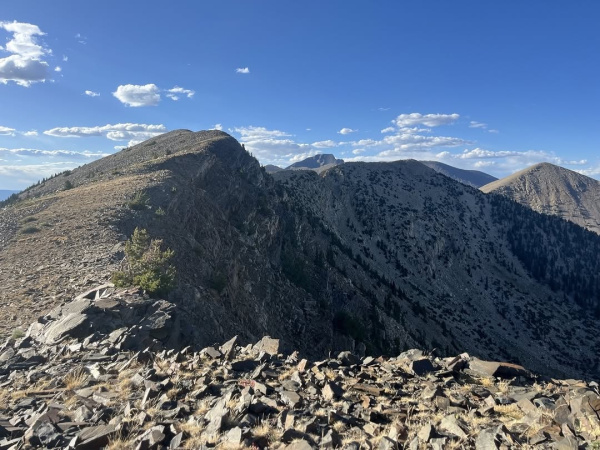
Hippity hoppity, your niche is now my property… 🐸
Amphibians aren’t the only living things able to leapfrog! If you spend enough time exploring the high altitudes of Great Basin National Park, you might notice limber pine and Engelmann spruce growing higher up than the park’s more famous bristlecone pines. These faster-growing species are better able to advance up our mountains as growing conditions become more favorable, allowing them to leapfrog past the slow-growing bristlecones.
Bristlecones pines naturally seek the most inhospitable environments where few other trees can grow. This means that other trees are starting to encroach on the ecological niche – the role or habitat a particular species fills in its environment – once occupied primarily by the bristlecones. Fortunately, the world’s oldest trees are nothing if not resilient, and Great Basin National Park offers us an excellent place to study them so that we can learn how best to protect and care for them even under changing conditions.
Next time you hike the upper elevations of the park, see if you can spot this leapfrogging in action.
Photo Credit: NPS/C. Murray
Featured image: The Chino copper mine in Grant County in southwestern New Mexico, Don Barrett/CC BY-NC-ND 2.0