
A startup wants 456 nuclear reactors, a fuel plant, and nuclear waste storage on 9,000 acres of public land. The Senate permitting bill would make sure the next president can’t touch it
On a stretch of national public land in Utah, a startup wants to build a massive data center powered by hundreds of small nuclear reactors. Now members of Congress from both parties are rushing to pass a law that would make it nearly impossible to unwind that project, or any other data center or nuclear waste facility that President Donald Trump and Interior Secretary Doug Burgum approve on America’s public lands over the next two years.
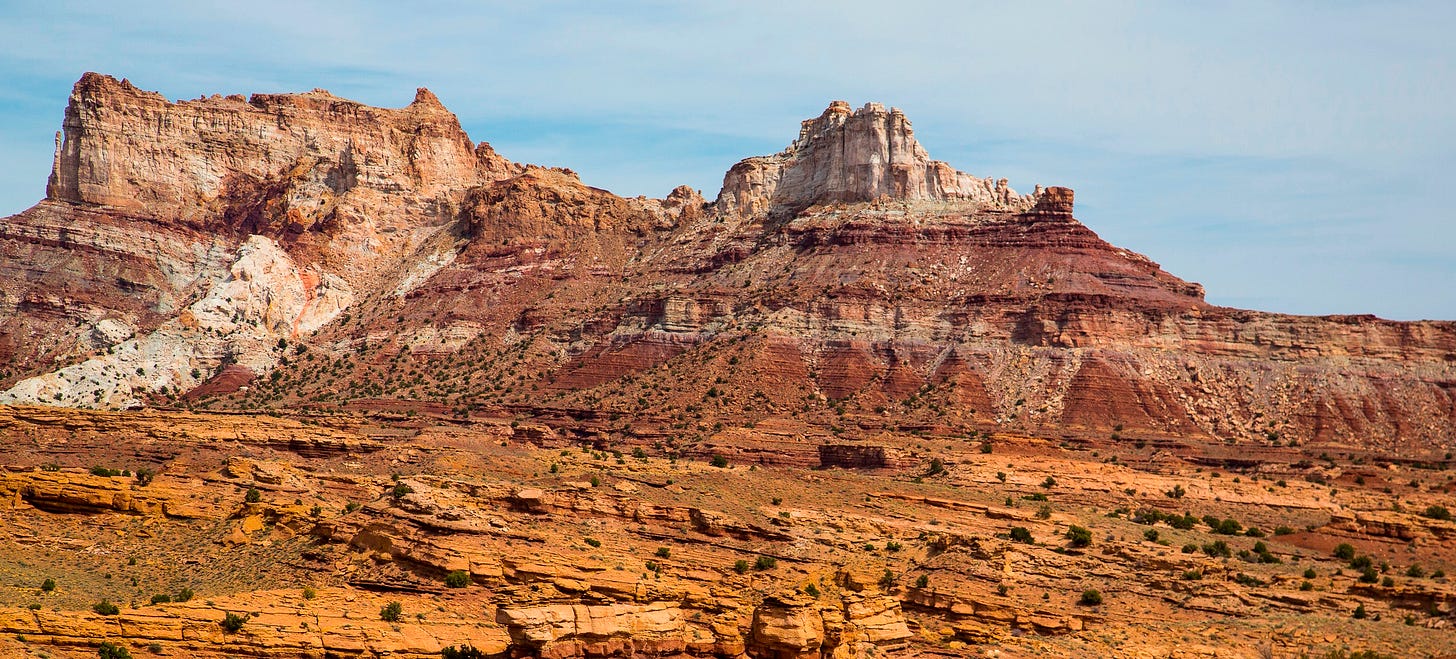
Valar Atomics’ “Project Beehive” aims to put 456 small nuclear reactors on more than 9,000 acres managed by the Bureau of Land Management near the town of Price, generating roughly 9.6 gigawatts to power a sprawling data center complex, more than twice the electricity the entire state produces on average. The plan also calls for a nuclear fuel production plant and storage for the radioactive waste the reactors produce. Valar wants to start non-nuclear construction by the end of this year and have its first reactors running by 2028, before President Trump leaves office.
Valar is a Trump administration favorite despite the fact that its technology and founder are largely untested. Its 27-year-old high school dropout-turned-CEO Isaiah Taylor was in the room when Trump signed his nuclear orders. Mother Jones reported that a firm that co-led a $130 million funding round for Valar was founded by a one-time pro-Putin activist from Russia who later did publicity work for Jeffrey Epstein.
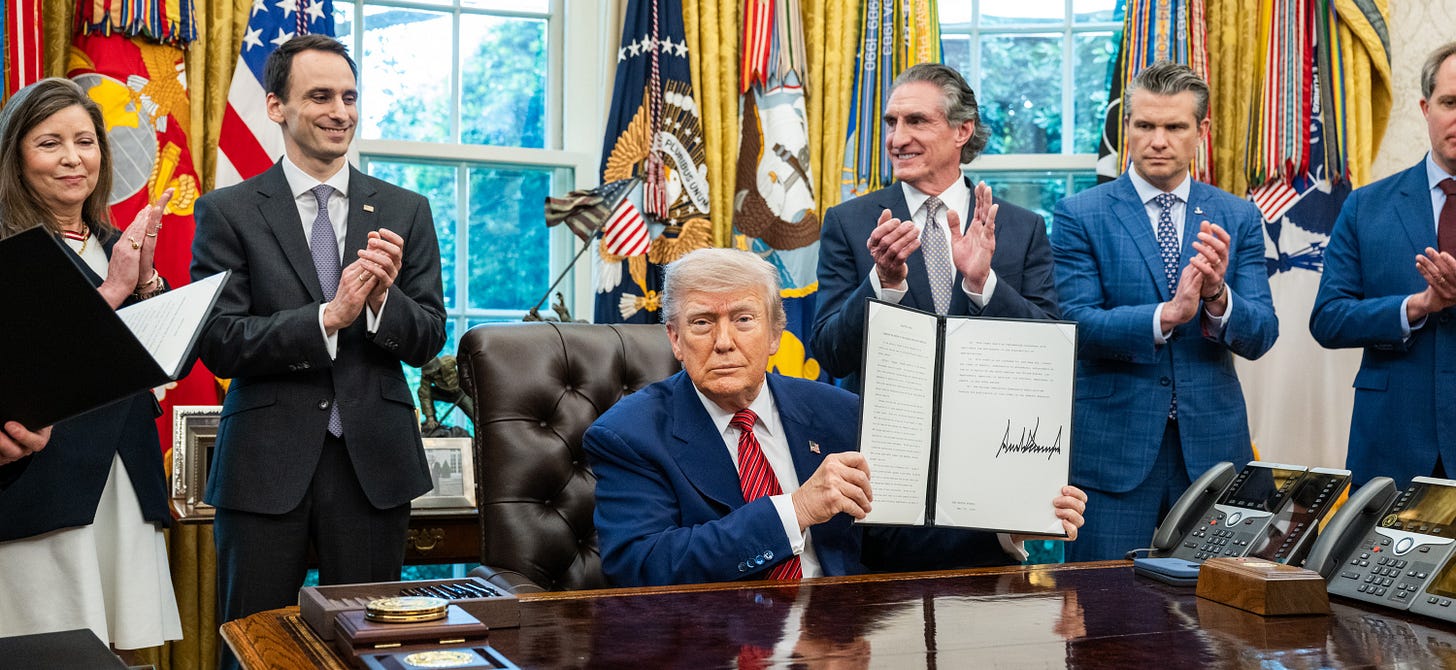
President Trump signs executive orders regarding nuclear energy in May 2025, White House photo
Now the Senate is planning to take up a massive bipartisan permitting bill the week after the November election. As it’s written, the permitting bill would lock in those data centers, nuclear reactors, and waste storage, likely forever. It would give President Trump two years to approve as many data centers on public land as he wants, making it “extraordinarily difficult, if not impossible” for the public or a future administration to stop or change them.
“Data Center Doug’s” pipeline
Beehive is the biggest entry in a pipeline Interior Secretary Doug Burgum has spent more than a year building. A July 2025 executive order directed the Interior and Energy secretaries to find federal land for data centers and “offer appropriate authorizations.” CWP’s BLM Data Center Tracker now shows at least 35 active data center-related applications covering more than 24,000 acres across six Western states. In June, BLM approved the first data center on public land, near Boulder City, Nevada, by swapping in a solar farm’s environmental review and skipping public comment on the project entirely. An Interior appeals board froze the project and sent the project back for a proper environmental review. In September, Trump handed Burgum expanded powers over energy under the Defense Production Act to prioritize contracts and allocate materials for energy production.
“We take electricity and an AI data center. We manufacture intelligence,” Burgum said in March 2025. He has called the National Environmental Policy Act, the Endangered Species Act and the National Historic Preservation Act “the trifecta of how to legally attempt to stop things from being built in America.” These three laws are in fact three of America’s bedrock conservation laws that protect land, communities, and people. The permitting bill rewrites all three laws in Burgum’s “trifecta,” clearing away the protections his administration admits stand in its way.
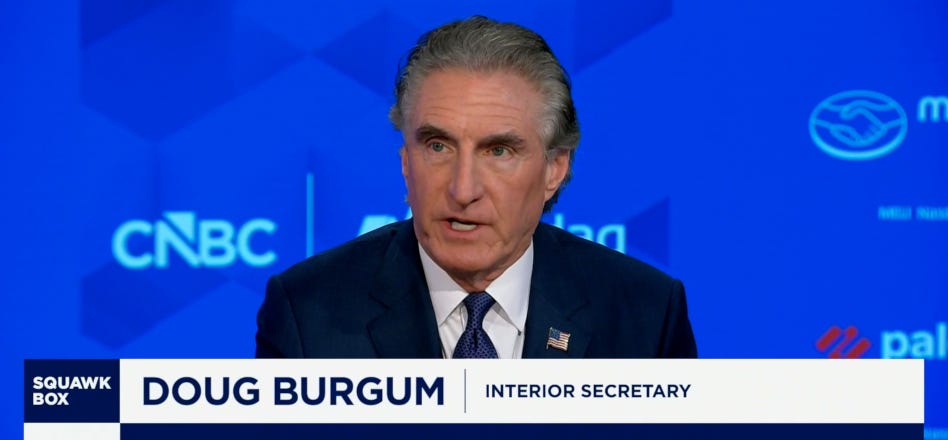
CNBC, October 7, 2026
The Trump administration is doing all this despite bipartisan backlash against data center development. In a Keep It Public Wyoming poll, only ten percent of likely voters said data centers are an acceptable use of public lands. Members of Congress have also asked Burgum to pump the brakes, asking him how the public will get a say on data centers on public lands. As far as we know, Burgum hasn’t responded.
What the bill actually does
The Bipartisan American Affordability and Jobs Act, written by Senators Mike Lee, Shelley Moore Capito, Martin Heinrich, and Sheldon Whitehouse, has real wins. It would speed up long-distance power lines and make data centers pay for the grid upgrades they require. Even some of its sharpest critics, like UC Berkeley law professor Eric Biber, say they “really want to support this deal.”
Earthjustice’s detailed guide to the bill credits it for making data centers pay for both existing grid use and new upgrades, and for finally tracking how much power they consume. Then, in the same section, it warns that the bill’s rewrites of environmental law “would clear a faster path to development of data centers on public lands,” naming Project Beehive specifically. Once the administration grants those permits, Earthjustice concludes, they will be very difficult to challenge or reconsider.
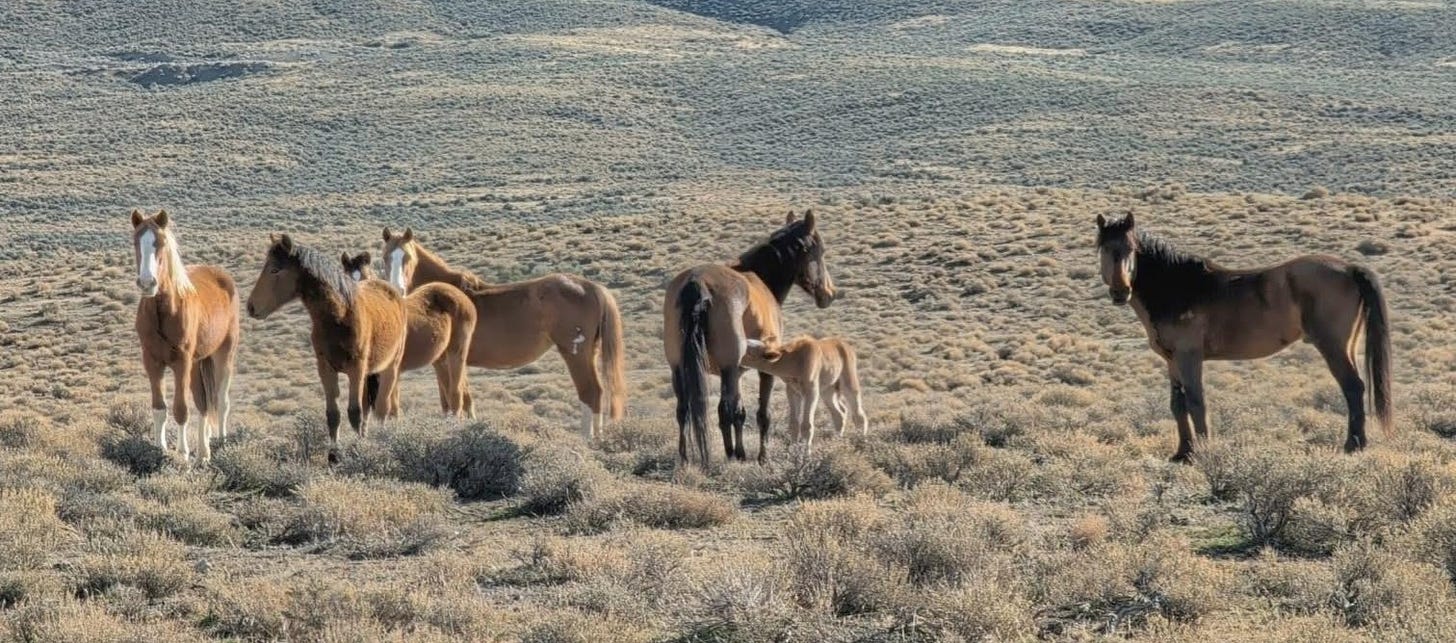
BLM Nevada
Tucked into the bill’s 417 pages are three provisions that, as written today, would be disastrous for America’s public lands.
The industry lock-in: The bill attempts to lock in development, including data centers and nuclear energy, the minute a project gets a federal green light. Section 1401 says agencies “shall not take any new action that would revoke, rescind, withdraw, terminate, suspend, amend, or alter” any federal permit in effect on or after September 16, 2026. There are exceptions for fraud, court orders, violations of law, and urgent new threats to life or property, but the agency has to prove them with “clear and convincing evidence,” a far higher bar than agencies normally face. Section 1401 never defines “project,” so the shield covers a data center or uranium mine as easily as a wind farm. Biber calls the section “a stealth repeal of a wide swath of federal regulatory law.”
The public lock-out: Today, if a judge finds an agency botched its environmental review of a project on public lands, the court can pause the project until the agency gets it right. The bill takes that power away. A judge can send the review back for a redo, but construction continues in the meantime, and Section 1401 bars the agency from changing the permit based on what the new review finds. Challengers also get just 150 days to sue. Justin Pidot, a University of Arizona law professor who served as general counsel of the White House Council on Environmental Quality, says that turns a court-ordered review into “essentially an empty paperwork exercise.”
Columbia Law’s Michael Gerrard warns that, given the rush to build data centers and the gas plants to power them, “the bill could lead to an effort to rush through federal approvals so that the next administration could not revoke them.”
The price tag: If an agency changes a previously-approved permit and loses in court, the permitting bill says taxpayers would owe the developer 25 to 50 percent of everything it has spent. Section 1402 of the bill goes further—if a future administration slows a whole category of projects, such as gas plants or nuclear fuel facilities, developers can collect 50 to 100 percent of a project’s expected construction cost. The money comes from the Judgment Fund, a permanent Treasury account that pays court judgments without Congress voting on each one. Biber calls the result “a one way ratchet”: an administration “can make it easier to grant permits … but it cannot make it harder.”
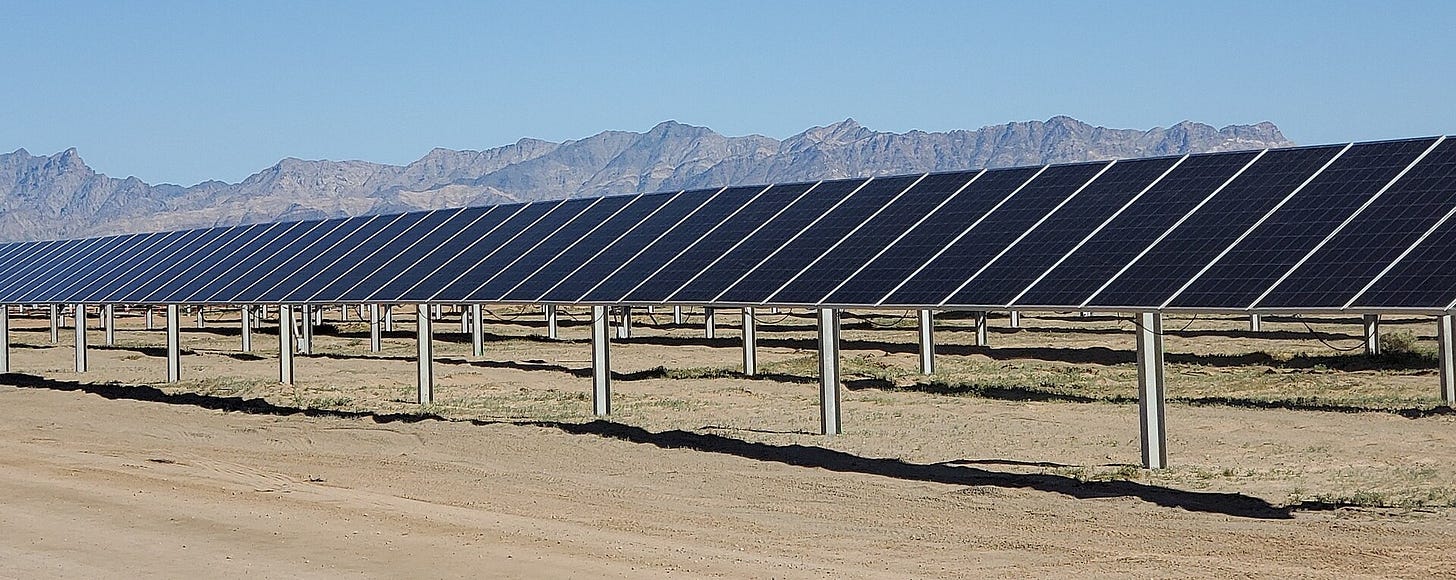
Blythe Solar Project, BLM California
A two-year blank check
The bill’s protections start September 16, 2026, covering any permit in effect on or after that date. Donald Trump leaves office January 20, 2029. Under the permitting bill, everything Burgum approves on public lands in the next 27 months would get that shield the day it takes effect, and the next president would be nearly powerless to unwind it.
Because Section 1401 blocks only new actions, everything Trump and Burgum have already done to cancel wind and solar projects stands. The provision “spares everything the Trump Administration has done to mess with clean energy permits,” writes Matthew Littleton, a former Justice Department lawyer. And as Harvard’s Jody Freeman points out, “nothing in the bill compels the administration to lift its blockade of wind and solar.” In the leadup to the permitting bill, many congressional Democrats had said that restarting renewable energy under the Trump administration was a primary goal—but the bill as currently written doesn’t do that at all.
If a new administration in 2029 wants a closer look at how much water Beehive’s reactors and data centers will draw in an arid corner of Utah, or whether the area is geologically stable enough to store nuclear waste for thousands of years, its Interior secretary would have to prove an exception by clear and convincing evidence and risk having to pay Valar a quarter to half of its costs. If the new administration pulls back on gas or nuclear fuel projects more broadly, Section 1402 kicks in. Section 1402 measures a new administration against the previous five years. For a president taking office in 2029, that baseline is 2024 through 2028, “by which time the baseline will be dominated by Trump’s practices,” Littleton writes. This would essentially lock in all of the fossil fuel, nuclear, and data center projects on public lands approved by the second Trump administration, and make it much harder for another administration to chart a new course.
BLM Utah
Short of a court order or an act of Congress, there’s no practical way to undo Burgum’s approvals. The next administration would find it nearly impossible to give the public the voice Burgum took away.
It only gets worse from there
Data centers and nuclear waste are only the start. Nine Tribal organizations, including the National Congress of American Indians and the Native American Rights Fund, have asked the bill’s sponsors to strip out its rewrite of the National Historic Preservation Act, which would let agencies judge the damage to sacred sites on their own and consult Tribes only after the conclusions are written. The climate case for the bill has also largely evaporated. The Center for Energy and Environmental Analysis found the bill’s transmission reforms would cut U.S. emissions by zero to four percent, while even a modest natural gas buildout for data centers, petrochemical plants, and exports “could swamp the clean energy benefits.”
The bill would also extend Section 1402’s payouts to nuclear fuel enrichment, reprocessing, and storage, just as the Energy Department courts states like Utah to host nuclear campuses. It would rush Endangered Species Act reviews and let states take them over, shield every drilling permit that results from the 2025 reconciliation law’s mandatory oil and gas lease sales, and lock in offshore leases sold before January 2029, including proposed sales off California. And Pidot warns an administration could use Section 1401 to subsidize its favored companies straight out of the Judgment Fund, no vote of Congress required. We dive into each of these problems in a separate post, and NRDC’s analysis covers even more of the bill’s fine print.
Heinrich’s legacy at risk
Few senators have done more for Western public lands than Martin Heinrich. He championed the Rio Grande del Norte and Organ Mountains-Desert Peaks national monuments. He introduced the Great American Outdoors Act, which permanently funded the Land and Water Conservation Fund. Last year, when Mike Lee tried to sell off public land in the budget reconciliation bill, Heinrich helped lead the fight that stopped him, then issued a warning: “to those already plotting to go after our public lands another way: Don’t. Unless you like losing.”
Fifteen months later, Heinrich’s co-author on this bill is Senator Mike Lee.
Last November, Heinrich took to the Senate floor to oppose Republicans’ use of the Congressional Review Act to throw out BLM management plans. “We know that CRAs cut the public out of land use planning,” he said. “Every single person deserves a chance to provide input on how they’re managed.” His bill, in its current form, gives Burgum a green light to cut the public out today, and makes it nearly impossible for the next administration to let them back in.
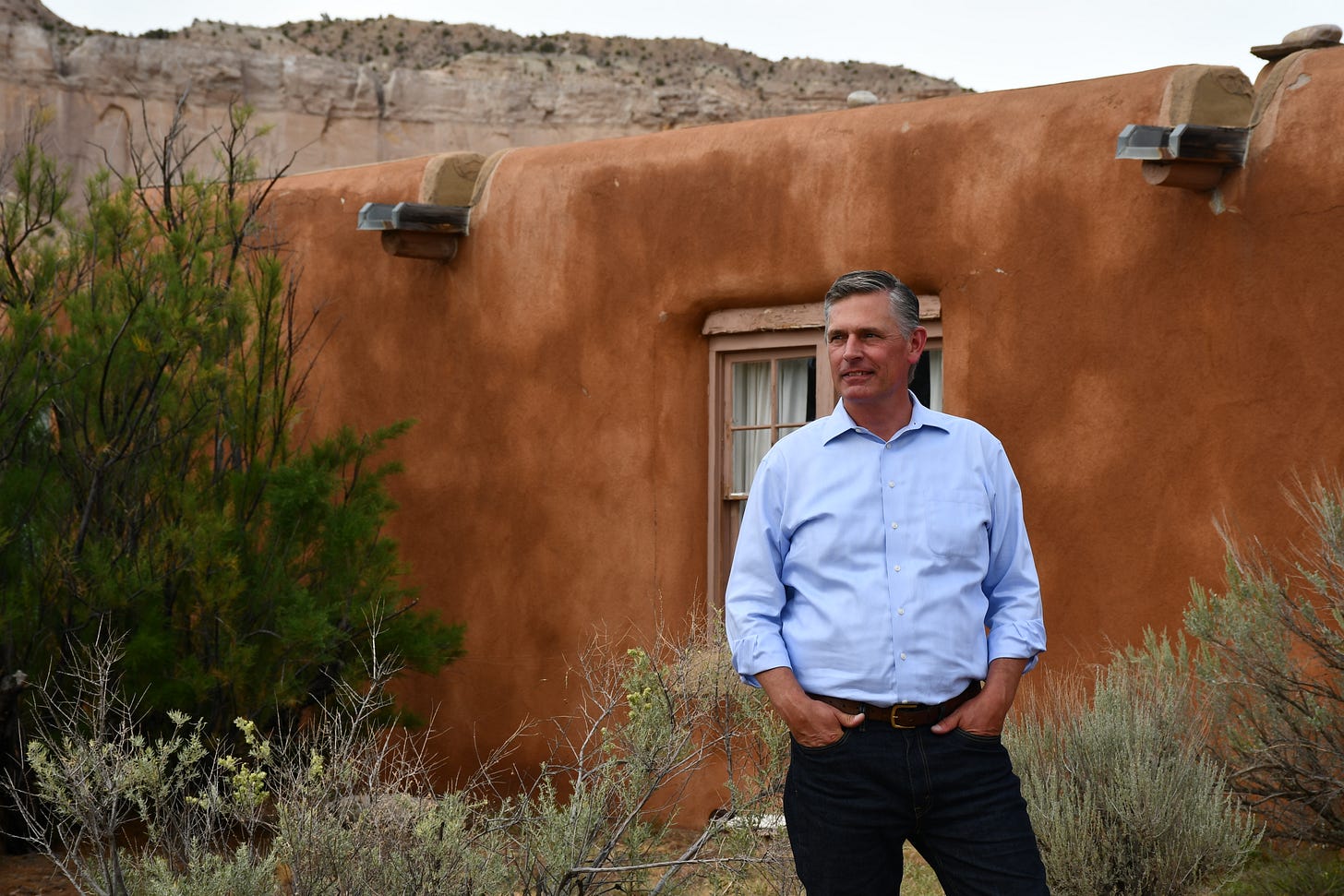
Sen. Martin Heinrich
In the same speech, Heinrich warned that overriding management plans told “Tribal communities that their opinions don’t matter about their ancestral lands.” New Mexico’s Pueblos now say much the same about the permitting bill. On Monday, the All Pueblo Council of Governors, which represents 20 Pueblo nations, announced it had unanimously adopted a resolution opposing the bill as introduced, Politico reported. “No one asked the Pueblos on how these changes would affect us,” said Charles P. Riley, governor of the Pueblo of Acoma. Heinrich’s office wouldn’t say whether it consulted Pueblo leaders during the negotiations. His New Mexico colleague, Senator Ben Ray Luján, is still reviewing the bill.
The Wilderness Society has criticized the bill, calling it “a false choice between building renewable energy and protecting public lands, cultural resources, and the public’s ability to engage on what impacts shared landscapes.” Earthjustice says, as written, the bill “will make government less, not more, effective” and “significantly restricts judicial review and access to effective legal remedies.”
Heinrich calls environmental advocates’ criticism of the bill “unfounded and misguided.” “We’re going to get to ‘yes’ faster. We’re also going to get to ‘no’ faster when a project is harmful,” he said in Albuquerque this month. Unfortunately, Section 1401 works the other way: once a permit is issued, an agency that learns a project is harmful has to clear a higher burden of proof, and may have to pay the developer, to say no.
Heinrich has good reason to want permits that stick after watching Trump go after approved wind projects. But as written, the shield protects this administration’s approvals far more than the wind farms it was meant to revive.
The sponsors plan to offer a package of changes when the bill reaches the Senate floor. Removing or overhauling Sections 1401 and 1402 and the historic preservation rewrite would go a long way toward rebuilding the trust Heinrich has lost among his public lands and Tribal allies.
Slow down and fix it
This bill can still be salvaged if Heinrich and Whitehouse engage with the Tribes, the communities, and the millions of Americans who have made clear they don’t want data centers and nuclear waste forced onto their public lands or into their backyards. Any permitting deal passed under this administration must strengthen the guardrails that keep Burgum in check, not hand him a blank check.
Major environmental groups are still pushing for changes, too. The Natural Resources Defense Council hasn’t taken a position, but its analysis on Monday called elements of the bill deeply flawed and said it will seek fixes to multiple sections and take a position before a floor vote.

Oil platform Gail in the Santa Barbara Channel, Wikimedia Commons
At a minimum, no data center or data center-related project on public lands should get Section 1401’s protection until Interior completes a West-wide programmatic environmental review, with public meetings across the region, and adopts a siting and compensation framework that puts the public, not data center developers, in the driver’s seat.
This bill was negotiated behind closed doors, rightfully earning plenty of distrust, and rushing fixes through during a lame-duck session will only deepen the public’s concerns. There’s plenty of time to get this right next year, under a Congress that is likely to be far more friendly to renewable energy.
Senator Heinrich says the bill “will age very well over time.” As it’s currently written, it will indeed age, locking in data centers and a new nuclear legacy on our public lands for generations—after all, the half-life of plutonium-239 is about 24,000 years.