
Earlier this month, President Donald Trump signed an executive order making changes to how presidential authority under the Defense Production Act (DPA) is delegated. Previously, the president delegated a variety of authorities under the DPA to the Secretary of Energy. Trump’s executive order amends the delegation of some authorities to include both the Secretary of Energy and the Secretary of the Interior, “with respect to all forms of energy under their purview, each of whom may exercise such delegated authority independently of the other.” At a time when our national public lands are already under attack, this hands Interior Secretary Doug Burgum a new way to ignore land protections and avoid following environmental laws under the guise of national security, with few guardrails or opportunities for the public to weigh in.
First passed in 1950, the DPA was originally designed to give the president limited authority to ensure that domestic industry can meet the country’s national defense needs. Over time, the DPA has been reauthorized and modified to expand the definition of “national defense” to include preparedness for national emergencies and other non-military needs. Presidents have also delegated some of these authorities to executive branch agencies. But why delegate authority to the Secretary of the Interior, whose job is to manage national parks and public lands? And why go to the trouble of stating explicitly that the Interior secretary can act independently?
One likely answer is that this is part of the larger Trump-Burgum agenda to dismantle national parks and other public lands that for-profit companies see as a nuisance standing in the way of expanded exploitation and the pursuit of greater private profits. While there are a number of legal and valid ways for companies to extract natural resources from national public lands, there are processes and guardrails in place to give the public an opportunity to review proposals and weigh in, and to ensure that other resources on those lands are being appropriately considered and protected. The Trump administration, however, has been working hard to eliminate as many of these as possible, to make it easier for companies to extract resources without having to engage with the public or conduct environmental reviews.
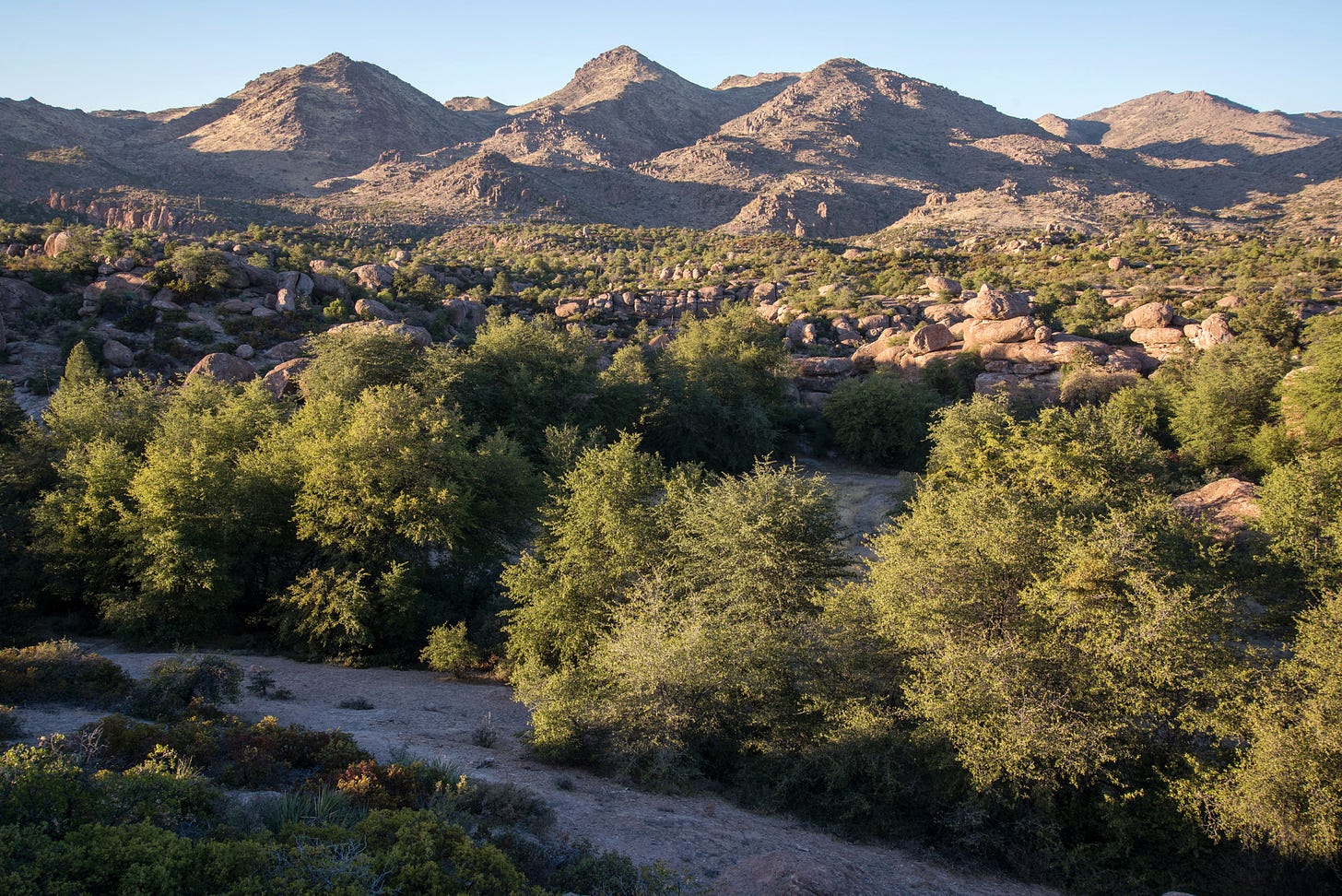
Oak Flat in Arizona, near the site of a proposed copper mine; Elias Butler/CC BY-SA 4.0

Another possible answer is that Doug Burgum just isn’t that interested in being Interior secretary and is looking around for assignments that bring him closer to Trump, such as personally overseeing Trump’s vanity projects in Washington D.C., or that would give him a more prominent role in global conversations about topics he finds more interesting, such as energy extraction to serve the AI industry. Early on in his time as Interior secretary, Burgum delegated most of his responsibilities to DOGE operatives, who immediately attempted to dismantle the agency through a variety of funding and staffing cuts.
Burgum also took on the job of chair of the National Energy Dominance Council, a new entity created by a February 2025 Trump executive order. The NEDC exists primarily to hold meetings on energy issues and hasn’t had much of an impact, but it gives Burgum some fancier hats to wear. Being Interior secretary makes him chair of the NEDC, and being chair of the NEDC gives him a seat on the National Security Council, a long-standing and legitimate entity with influence on U.S. foreign policy.
Burgum’s resume-building aside, expanded delegation of DPA authority is concerning for national public lands for a few reasons. Many DPA authorities become available during a “national emergency,” and during what most Americans would consider a true emergency, this makes sense. However, the Trump administration has abused the concept of an “emergency” to create open-ended blanket justifications for not following laws it finds inconvenient. The “national energy emergency,” put in place by the Trump administration in January 2025, has been used to justify policy actions to boost oil and gas drilling, prop up coal, and increase domestic mining and mineral processing, among other things. Similarly, the “border emergency” has been used to justify the militarization of public lands across the southern U.S., including the construction of a border wall through Big Bend National Park and the bulldozing of a sacred Tribal site in Arizona for border wall expansion.
With these “emergencies” in place, it’s already easy to use DPA authorities to advance the Trump administration’s policy priorities. The latest executive order gives an additional agency head the power to lean on national security to justify policy changes that will impact over 500 million acres of national public lands. Burgum would have at his disposal a new set of tools that could enable him to use national security as an excuse to prioritize oil and gas production, expand mining, or approve data centers on national public lands.
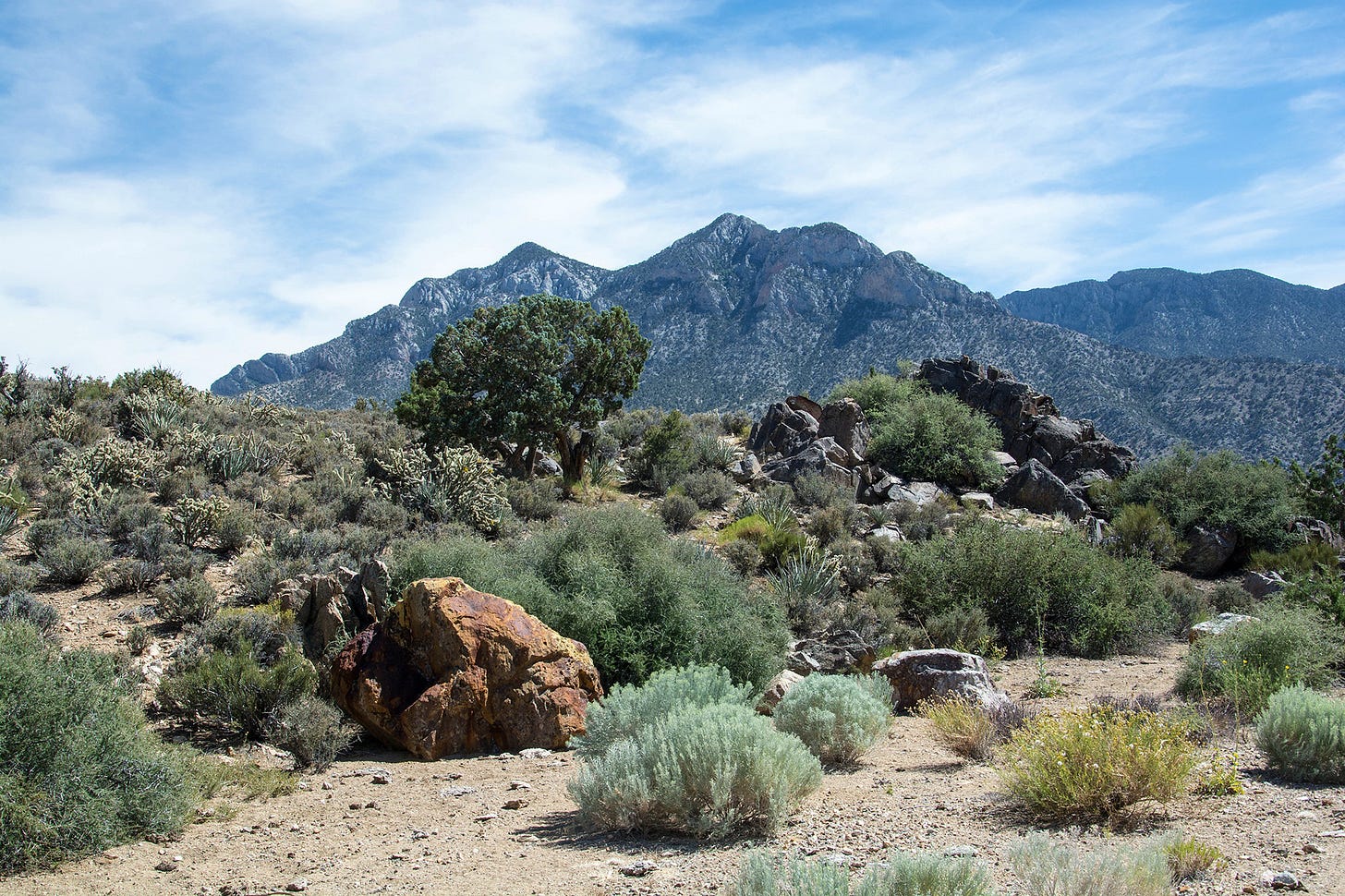
Clark Mountain in the Mojave National Preserve, near the site of a proposed gold and rare earths mine; Matthew Dillon via Flickr/CC BY-SA 2.0
This is concerning enough under the existing DPA. What if the DPA were updated to give agency heads even greater authority to waive laws in the name of national security? A proposal considered earlier this year would have done exactly that. The DPA Modernization Act would have expanded the authority agency heads have to waive regulations that implement environmental laws and the authorities available during a national emergency. While this particular proposal was shelved in favor of a “clean” reauthorization of the DPA without these changes, this proposal or one like it could come back in the future, including later this year when Congress considers the National Defense Authorization Act.
Between the “national energy emergency” and the “AI arms race,” it’s clear that Trump and Burgum are looking for any way they can tie national public lands to national security so that they can get environmental protections out of the way of extracting resources and building data centers, all while avoiding taking public comment on proposals they know are overwhelmingly unpopular with the public. They’re also failing: despite policies put in place to address the “energy emergency” and escalate the development of AI, energy prices are persistently high, and opposition to the data centers that support AI is intensifying. Perhaps the Trump administration should focus on something Westerners actually want: policies to ensure that outdoor recreation, clean water, and wildlife habitats on national public lands are protected for future generations.
Featured image: Bears Ears National Monument, an area that has drawn interest from uranium and coal mining companies; BLM Utah