
A 1950s defense law is being rewritten to gut environmental review, expand the government’s financial stake in mining, and fast-track extraction in the name of ’emergencies’
When it comes to threats to national public lands, the Defense Production Act (DPA) isn’t typically one of the first laws that comes to mind. But the latest reauthorization of the DPA presents a major threat to public lands—and could be attached to this year’s National Defense Authorization Act (NDAA), the annual must-pass defense spending bill. If passed, the proposed changes would pave the way for the federal government to waive environmental regulations, expand its financial interests in mining projects it’s supposed to be regulating, and prioritize mining on public lands in the name of national “emergencies”—all subsidized by taxpayer-funded financial incentives for the mining industry.
First passed in 1950, the DPA was originally designed to give the president limited authorities to ensure that domestic industry can meet the country’s national defense needs. Over time, the DPA has been reauthorized and modified to expand the definition of “national defense” to include preparedness for national emergencies and other non-military needs. The most recent proposed reauthorization of the DPA, H.R. 7688, the DPA Modernization Act, proposes to grant agency heads new authority to waive environmental regulations in the name of national security, with decreased oversight and transparency, at the expense of the public’s ability to protect landscapes, wildlife habitat, and outdoor recreation in the West and across the country.
Expanded waiver authority
The most concerning piece of the DPA Modernization Act is the addition of a new sweeping authority for an agency head to waive any federal or state regulations he or she, in his or her sole discretion, believes need to be waived in order to expedite procurement or permitting for technologies or minerals. This would include regulations that implement bedrock environmental and land management laws like the Federal Land Policy and Management Act, the National Environmental Policy Act, the Endangered Species Act, the Clean Water Act, and the Clean Air Act—laws that were passed by elected members of Congress to guard against exploitation and abuse of our national public lands and natural resources. This approach has already been attempted by the Department of Homeland Security in the case of the border wall through Big Bend National Park, though this did not involve any DPA authority. Expanding this waiver authority into policy areas covered by the DPA and codifying it through the DPA Modernization Act would be extremely dangerous as well as difficult to undo.
In addition, this provision of the DPA Modernization Act does not restrict this waiver authority to true “critical minerals” (as defined in the Energy Act of 2020), allowing agency heads to exercise this waiver authority for any mineral. This opens a back door for agency heads to bypass all environmental regulations for a much wider range of projects, even coal mining and other fossil fuel projects.
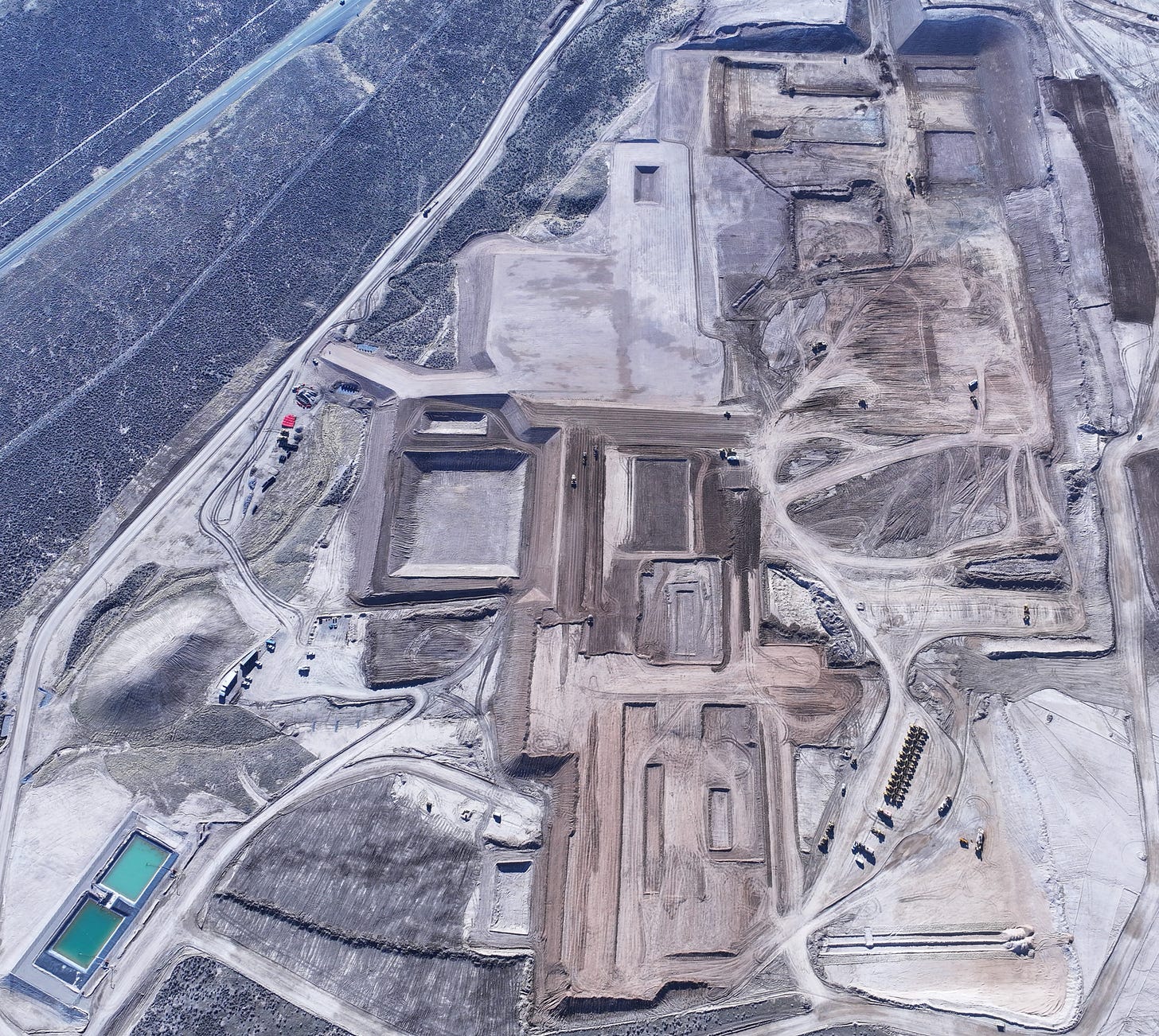
Aerial view of the Thacker Pass lithium mine, U.S. Geological Survey
More financial support and incentives for mining
The DPA also contains a number of provisions that are designed to support domestic industry by providing financial incentives such as loans, loan guarantees, and purchase commitments. Mining is an industry with an especially high level of financial risk and uncertainty. Adding taxpayer-subsidized financial support, on top of other support the mining industry already receives in the form of other subsidies combined with not paying any royalties, could artificially make a mining project financially viable even if it is unable to secure sufficient private funding. The changes proposed by the DPA Modernization Act could make it easier for the mining industry to shift financial risk to American taxpayers while increasing the number of mining projects that can move forward on national public lands only because they are being propped up by the federal government. To support this expanded use of DPA financial support for mining and other industries, President Donald Trump’s budget proposal for Fiscal Year 2027 requests more than $30 billion for DPA loans, loan guarantees, and purchase commitments. This is well above the current $750 million cap on funds in the current DPA, but the DPA Modernization Act proposes raising this cap to $2 billion to allow for a major expansion of this use of the DPA.
Abusing ‘emergencies’ to avoid following environmental and other laws
The DPA Modernization Act expands the authorities that would be available under the DPA to address a national emergency declared by the president. This potential expanded authority has high potential for abuse, as there are few meaningful limits on what the president can declare as a national emergency and what justification is required. Since President Donald Trump’s declaration of a national “energy emergency,” the administration has leaned heavily on this declaration to attempt to justify a wide range of policy actions to prop up the fossil fuel industry, such as the recent proposed changes to the oil and gas leasing rule, to cite just one example. Similarly, the “border emergency” is being used to justify the militarization of public lands across the southern U.S. including the construction of a border wall through Big Bend National Park and the bulldozing of a sacred Tribal site in Arizona for border wall expansion. These and other emergencies, real or fake, could be used by this and future administrations as an excuse to exercise DPA authorities that avoid oversight and circumvent environmental and other laws.
Loans made under DPA authority normally have to meet a set of specific conditions. The DPA Modernization Act would let some of those conditions be waived once a national emergency is declared by the president.
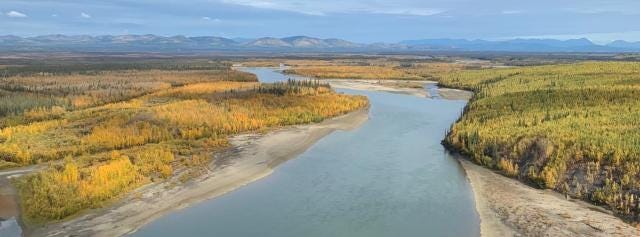
The Koyuyuk River in the area of the Ambler Road project in Alaska, Bureau of Land Management
Entrenching conflicts of interest by authorizing equity stakes
The DPA Modernization Act would also make it easier for the federal government to take equity stakes in mining companies with fewer guardrails. This would expand a practice already in play under the Trump administration that creates a significant conflict of interest by putting the federal government in the position of overseeing and regulating activities in which it has a direct financial interest.
The DPA currently does not say anything about the federal government taking equity stakes in mining or other companies. The DPA Modernization Act proposes to explicitly authorize this. Encouraging the federal government to take equity stakes in companies and industries it is simultaneously overseeing and regulating creates a clear conflict of interest. The U.S. has already taken equity stakes in mining projects, including the Mountain Pass rare earths project in California and the Thacker Pass lithium project in Nevada, and is threatening to do so for Ambler Road in Alaska. The Trump administration clearly has an appetite for increased use of this type of agreement to support projects across the country for political reasons.
In addition to explicitly allowing the federal government to enter into this type of conflicted arrangement, the bill also leaves the door open for individual government officials to personally invest in companies that are DPA beneficiaries. This has already happened at least once: President Trump’s family has a financial stake in Vulcan Metals, a rare earth minerals company that recently received a $620 million loan from the Defense department. While the highest-level executive branch officials would be prohibited from doing this, plenty of other senior administration officials (and their families) would have this option available to them with no guardrails. In addition to personally benefitting financially from such investments, an administration official could hypothetically have a board of directors position or employment offer waiting for them with a DPA beneficiary for when they leave the administration, creating a strong incentive to make decisions that would benefit that company or misuse information they have access to in order to benefit that company.
Critical Mineral Resilience Initiative
The DPA Modernization Act includes a Critical Mineral Resilience Initiative, which allows any Cabinet secretary to create purchase agreements, price floors, or other financial incentives for “critical and strategic minerals.” Like with the proposed expanded waiver authority, expanding this initiative beyond true “critical minerals” (as defined in the Energy Act of 2020) would give agency heads the authority to use a broad set of financial incentives to prop up any mineral project. The federal government would be able to do things like buy coal to prop up a coal mine or company, set a price floor for oil and gas to reduce risk and incentivize oil and gas companies to produce more, or any number of other meddling activities to interfere with market forces to advance the administration’s political agenda.
What’s next?
The DPA Modernization Act could be considered as early as the week of June 29th by the House Rules committee for potential inclusion in the National Defense Authorization Act, the annual defense spending bill that is considered a “must-pass” piece of legislation before the end of the year. The provisions in the DPA Modernization Act represent a significant change from previous reauthorizations of the DPA and deserve more careful scrutiny before the bill is rolled into a must-pass package. The potential for long-term, taxpayer-funded takeover of our national public lands by private for-profit mining companies is far too great to grant President Trump, or any future president, the ability to wave a magic wand to bypass environmental laws and public land protections in the name of fake emergencies.
Featured image: The Mountain Pass rare earth element mine in California, U.S. Geological Survey