
Karen Budd-Falen’s family stands to benefit from grazing policies that favor ranching at the expense of the long-term health of landscapes and habitats in the West
Over the past year and a half, the second Trump administration has pursued an aggressive agenda to prioritize extractive uses of our national public lands at the expense of wildlife and their habitats, outdoor recreation access, and the iconic natural landscapes that are unique to the Western U.S. Many of these efforts have focused on oil and gas, coal, timber, and mining. Now, under the leadership of Karen Budd-Falen, a public lands rancher who is also the Interior department’s third-highest ranking official, grazing is getting its turn in the spotlight.
Karen Budd-Falen’s leadership at Interior on this issue has already raised a number of ethical questions. Her family owns ranches that could benefit from pro-grazing policy changes. This situation would normally require that she not work on grazing-related policy at the Interior department; however, Budd-Falen was granted a waiver to work on grazing issues despite the potential for her family to benefit directly.
Largely bypassing Congress, the Trump administration has focused on executive orders and agency actions to force its priorities while simultaneously removing protective regulations and policies that were designed to protect our environment and national public lands from the excesses of irresponsible exploitation of our natural resources and ensure that the public has a voice in how public lands are managed. After issuing executive orders and rescinding rules related to oil and gas and mining on national public lands, the administration is now turning its attention to grazing. In May, on the same day that the Bureau of Land Management’s Public Lands Rule was officially rescinded, the BLM published new proposed grazing regulations that would loosen rangeland health standards, narrow grazing permits to strictly “production-oriented” uses, make a number of administrative procedures more favorable to ranchers, and significantly limit opportunities for public input.
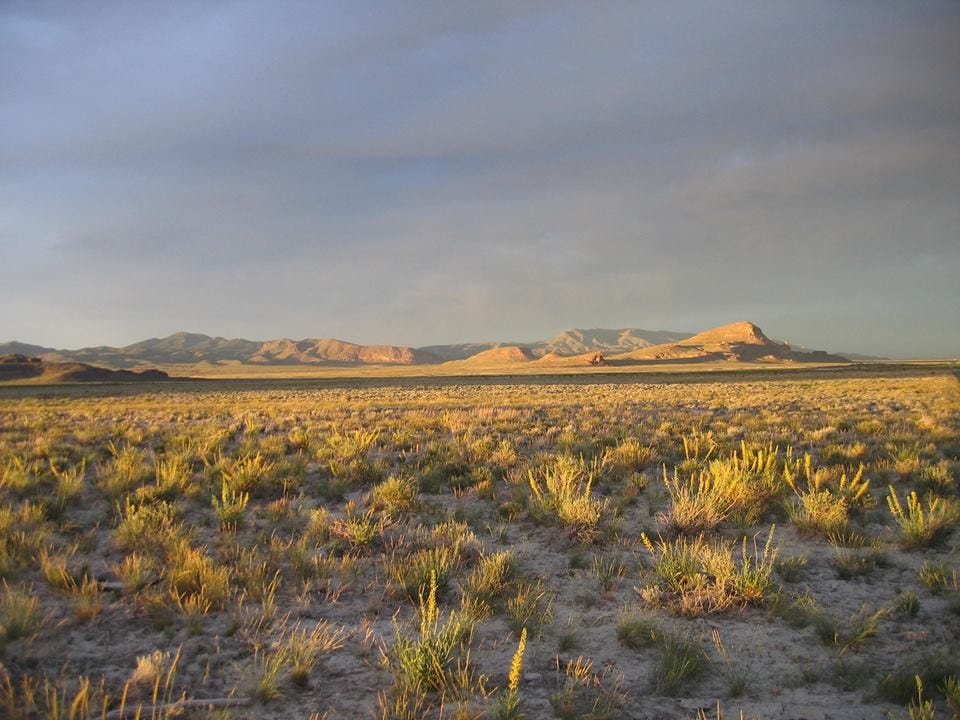
Grouse Creek Mountains Rangeland in Utah, Bureau of Land Management
Easing rangeland health standards to dilute the impacts of grazing
Some of the most significant changes have to do with how the BLM proposes to assess and monitor rangeland health. The current grazing regulations contain a section that lays out four fundamentals of rangeland health: watersheds are in properly functioning physical condition; ecological processes are maintained; water quality meets state standards and achieves BLM management objectives; and habitats are restored or maintained for threatened and endangered species. These fundamentals are the basis for more detailed landscape health standards and guidelines, and landscapes are assessed to see if they are meeting these standards. The proposed new regulations propose to move these fundamentals out of the grazing regulations and instead create a new section that applies to all BLM programs, not just grazing. While on its face this is not necessarily a bad thing, in the wrong hands it has the potential to be misused; this is a reasonable idea with potentially dangerous implementation.
Along with this move, the proposed new regulations also eliminate water quality from the landscape health fundamentals entirely, arguing that states should monitor and enforce compliance with water quality standards, and seemingly abandoning the requirement for BLM to meet its own goals for water quality. The impacts of grazing on water quality can be significant in places where cattle cross streams and increase erosion into waterbodies. While some states may do a better job than the BLM has been doing, other states may not have the capacity to suddenly take on the additional water quality monitoring and enforcement that has up until now been the BLM’s responsibility.
The proposed regulations also would change how landscapes are evaluated for whether they are meeting these fundamentals. Rather than evaluating individual allotments, the regulations propose to conduct rapid condition assessments of larger “landscapes,” which are loosely defined as “an interacting mosaic of ecosystems and human systems” that share common management conditions.” This could be used as a way to dilute the impacts of grazing across a larger area. For example, say a grazing allotment is 10 acres. If all 10 acres are failing to meet landscape health standards and grazing is found to be a significant factor, then 100 percent of the allotment would be failing due to grazing which would require BLM to take “appropriate action” to address the failure. If, however, those same 10 failing acres are evaluated as part of a 100-acre “landscape,” now only 10 percent of the landscape is failing, which could lead to only minor management changes or perhaps no changes at all.
Even if a landscape is not meeting landscape health standards, the proposed regulations offer even more ways to take the blame off of grazing. For failing landscapes, the BLM would be required to conduct a “causal factor determination” to identify what other land uses or other factors are contributing to the landscape’s failure to meet landscape health standards. Thinking back to the hypothetical 10-acre allotment, if it is within a landscape that also supports other uses such as oil and gas drilling or outdoor recreation, those uses could be assigned some of the blame for declining landscape health, offering the BLM an excuse to allow grazing to continue with no changes. On top of that, the causal factor analysis would also identify factors outside of the BLM’s control, such as drought, wildfire, wildlife (which are managed by the states), or activities on adjacent private lands. BLM would be required to address only those causal factors that are within its control. This means if landscape health is declining due to drought, ranchers would not be required to make any adjustments to grazing on that landscape since drought is not under BLM’s control. “Grazing would be effectively locked in, even when droughts, fires or other natural disasters make it impossible to meet rangeland health standards,” Center for Western Priorities Executive Director Aaron Weiss told E&E News.
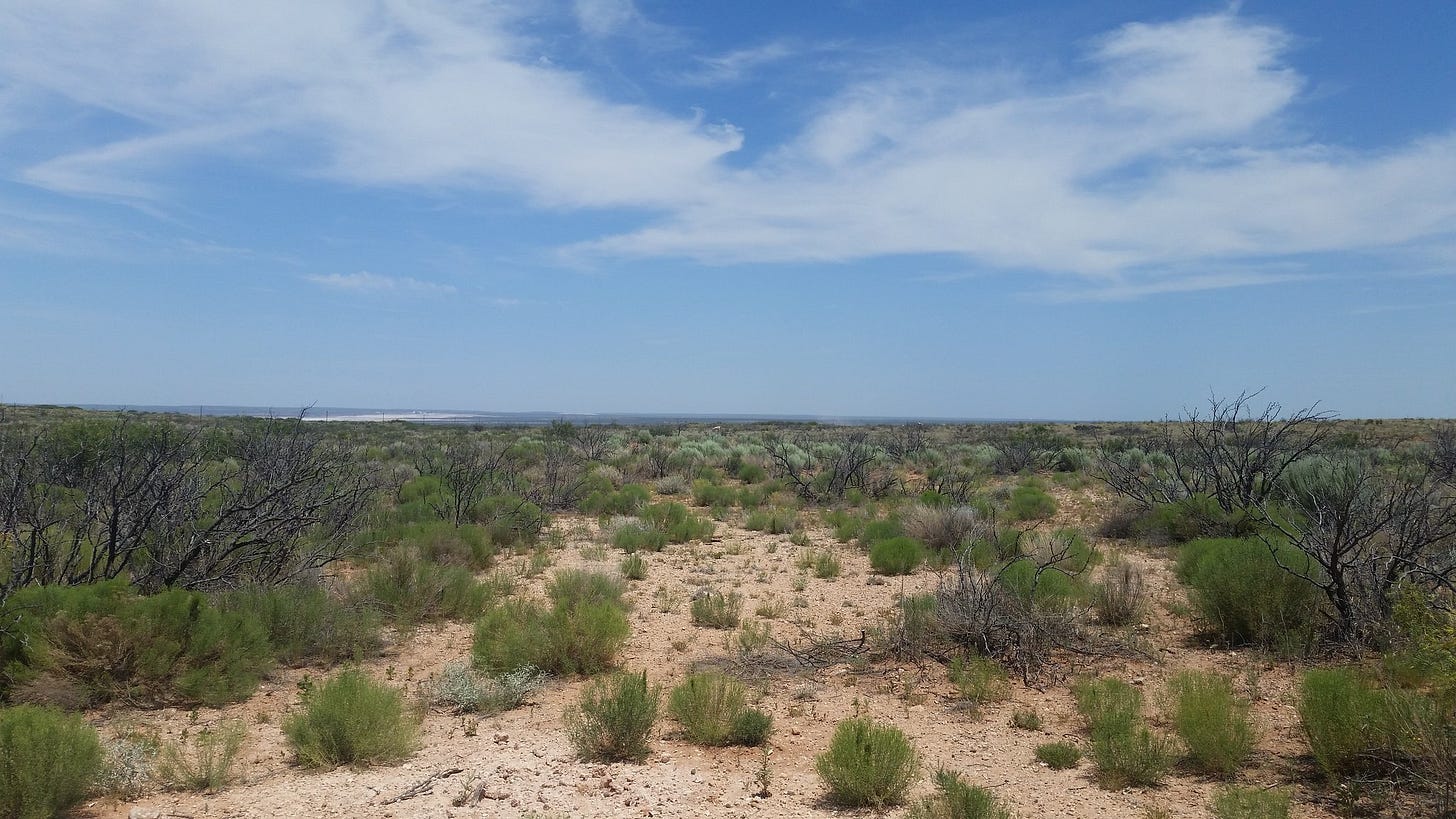
Rangeland in New Mexico, Bureau of Land Management
Narrowing rangeland use to “production-oriented” grazing
The proposed regulations seek to narrow eligible permittees to those engaged in the production-oriented livestock business. In recent years, conservation-oriented organizations have entered into agreements with grazing permittees to buy out grazing leases to allow the landscape to rest and recover, improving conditions for wildlife and native plants. These arrangements have been popular with hunters, who appreciate opportunities for wildlife habitat to recover and for wildlife to return to areas that had been dominated by livestock. “Those vacant allotments, whether on Forest Service or BLM ground, are elk habitat, and they were retired for wildlife purposes, whether it was to expand the range of elk to get them off private lands or to expand bighorn sheep distribution into areas previously occupied by domestic sheep,” Nick Gevock, Northern Rockies organizer for the Sierra Club and a Montana hunter, told Outdoor Life. “The rules will serve to reduce wildlife distribution and to push them back into marginal habitats or onto private lands.”
A recent example of a conservation-oriented use is the grazing leases held by the conservation organization American Prairie, which used its leases to graze bison as part of a larger effort to restore the health of the ecosystem. These leases have irritated Budd-Falen and other ranching advocates for years, and in May 2026 Interior Secretary Doug Burgum personally intervened to order the cancellation of American Prairie’s grazing leases, citing their non-production-oriented nature. This cancellation came just days before the publication of the proposed grazing regulations.
In a seeming contradiction, in the midst of narrowing grazing to production-oriented use, the proposed regulations also expand grazing to include a new category of “targeted grazing” to manage wildfire risk. Ranching advocates have argued that grazing is an effective way to reduce fuels in areas at high-risk for wildfire, even though the evidence is mixed at best. It’s primarily ranching advocates and their allies in Congress, not firefighters, who are asking for increased use of grazing as a wildfire risk management tool. In many cases, overgrazing is what has increased the risk of catastrophic wildfire in the first place by creating the conditions that invite a takeover of the landscape by invasive and fire-prone species like cheatgrass.
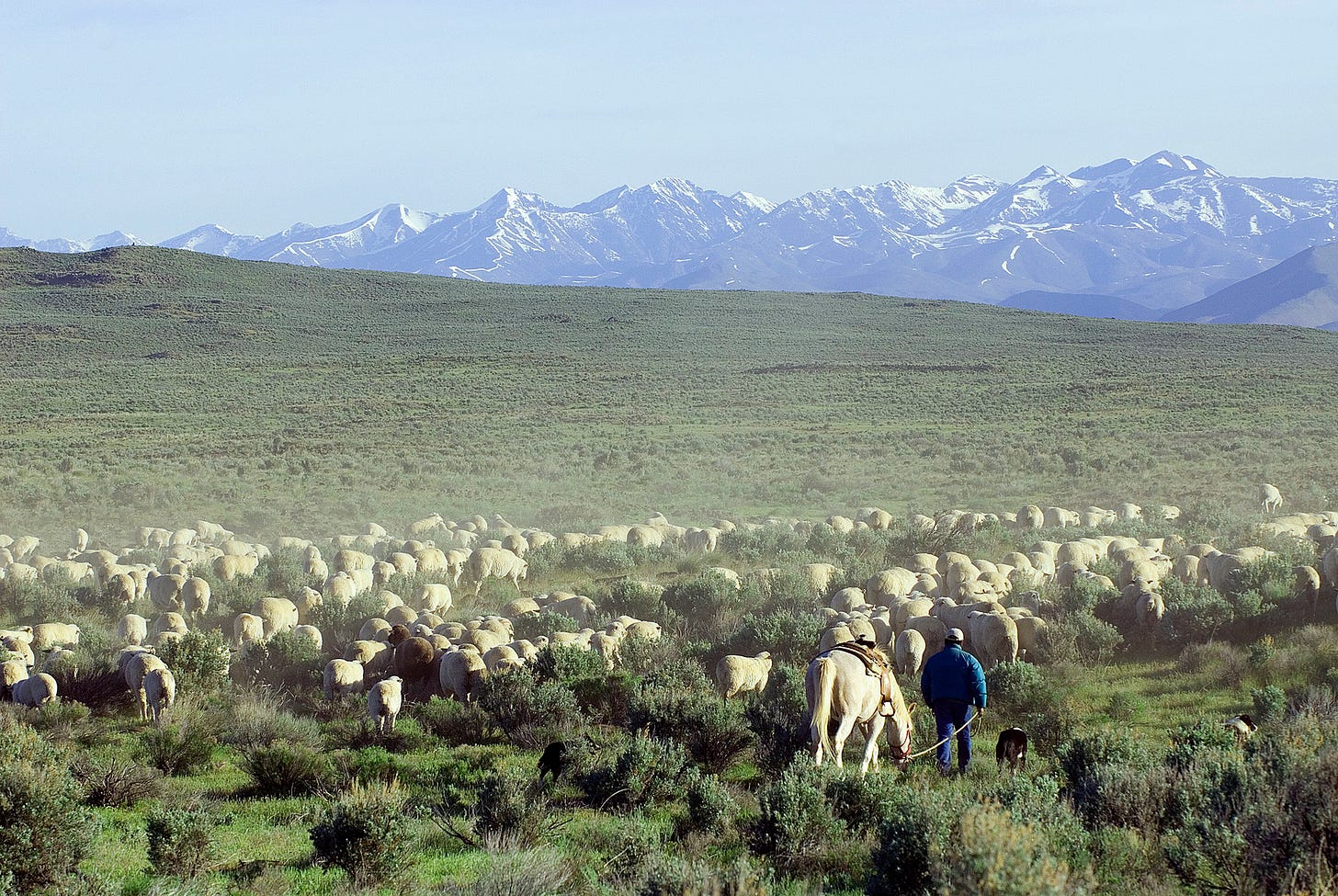
Sheep moving across public lands in Idaho, Bureau of Land Management
Making grazing permit administration more favorable to ranchers
A number of provisions in the proposed regulations are intended to “streamline” administrative processes for grazing permit holders; some of these come at the expense of public engagement and rangeland health.
One of the most significant changes has to do with what permittees can do while appealing a decision. Currently, if the BLM makes a grazing permit decision and the permittee decides to appeal, the permittee must also file a separate petition to suspend that decision in order to continue grazing while the appeal is pending. A successful petition must show the relative harm of the decision to both sides, the likelihood of the appeal’s success on the merits, the likelihood of immediate and irreparable harm if the suspension is not granted, and the public interest. Under the proposed new regulations, filing an appeal would automatically suspend the decision while the appeal is pending, without an additional petition needing to be filed—a procedural gift to ranchers. Appeals of grazing decisions can take months, meaning that potentially harmful grazing would continue for months after the BLM has ordered it to stop.
Other administrative provisions include:
- Criteria to distinguish between unauthorized use (i.e. grazing without a permit or violating the terms of a permit) which is “willful,” and that which is “nonwillful,” specifically creating a new “incidental” category of nonwillful unauthorized use, which a BLM officer could resolve informally.
- Allowing for grazing permits to include flexible terms and conditions, which would allow permittees to adjust grazing practices, within preset limits, without seeking BLM approval.
- Giving permittees the opportunity to apply for a 21-day grace period on either end of their grazing permit, for a potential 42 extra days of grazing. These grace periods would require written application and approval.
- If the BLM requires a reduction in active use on an existing permit, these reductions would be considered a temporary suspension, rather than a permanent reduction; the permittee would have the ability to apply for the original use to be restored.
- An expansion of the list of direct-to-final decisions that can be made without first issuing a proposed decision with an opportunity to protest, including:
- Trailing permits (moving livestock across public land from one area to another);
- Permits for fewer than 50 animal unit months (in general, one cow and calf grazing for one month is one AUM);
- Straightforward grazing permit renewals with no changes, if there are no other interested parties.
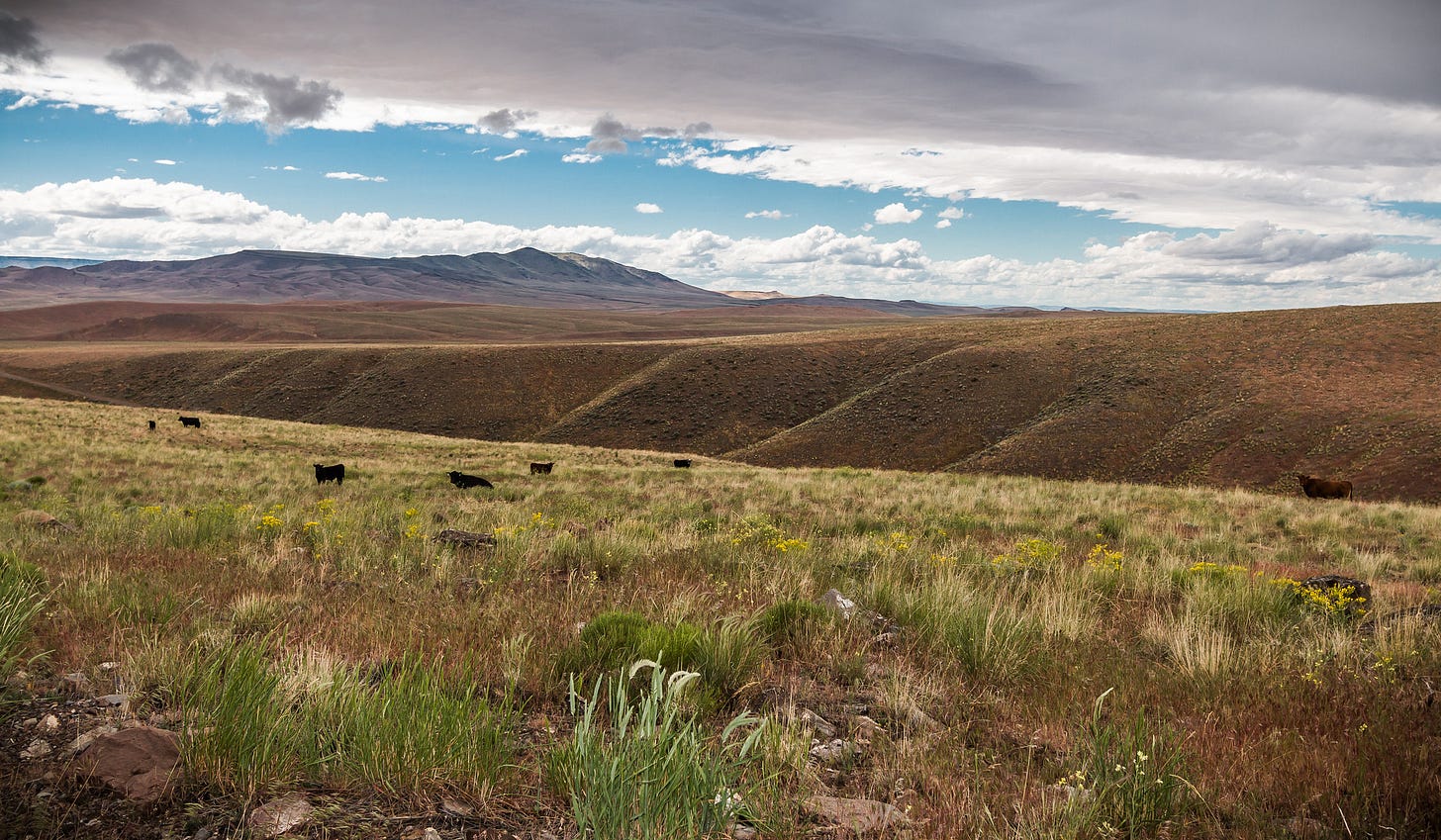
Cattle grazing on public lands in Oregon, BLM Oregon and Washington
Cutting the public out
The proposed regulations contain a number of provisions that are openly intended to reduce opportunities and requirements for public engagement and consultation. Public comment would still be required when a document is required by the National Environmental Policy Act, such as an Environmental Impact Statement. For decisions that have a protest period, it would be up to the public to identify and monitor the website where decisions are posted, since the protest period will now start when the decision is posted online and notices would no longer be mailed to interested parties. For individual allotments, however, the public would no longer have an opportunity to weigh in; only the affected permittee and the state the allotment is in would be allowed to comment.
“These rules take the public out of public lands,” said Gevock, the Montana hunter. “In order to protest, you have to be a permit holder. They’re openly saying we want to sterilize the landscape of wildlife to make room for livestock but hunters don’t get a chance to comment about those changes on a community or a hunting-district scale.”
The proposed regulations also eliminate the requirement that the BLM consult with Resource Advisory Councils—made up of local citizens representing a variety of interests who advise the BLM on a range of issues—on the development of landscape health standards or allotment management plans. This would be a willful missed opportunity to seek input from a group of stakeholders already in place, who could help the BLM develop standards and plans that have support from the community.
Is there anything positive?
Credit where credit is due: Under existing grazing regulations, sons and daughters of existing permittees can access minor special treatment that was likely originally intended to help the next generation prepare to take over a family ranch. The proposed regulations would create a new “beginning rancher” status for a person who has never previously held a grazing permit and has not owned, controlled, or operated a farm or ranch for more than ten years. This could help create more opportunities for existing ranchers whose own children are not interested in ranching. These ranchers often face significant financial pressure to sell their ranches to developers who will likely convert them to uses that result in the loss of natural areas. Offering a new “beginning rancher” status could make it more financially viable to protect more working lands from these development pressures, while creating more opportunities for people who are interested in ranching but were not born into a ranching family. While irresponsible bad actors have tarnished grazing’s reputation, many individual ranchers are proud stewards who care deeply about the land and participate in initiatives to protect habitat and restore connectivity across the West.
What’s next?
The proposed regulations are open for public comment through July 13.
Featured image: Rangeland in Arizona, Bureau of Land Management