
In Congress, Steve Pearce supported bills to privatize public land, gut the Antiquities Act, prioritize oil and gas drilling, and weaken the Endangered Species Act
President Donald Trump has nominated Steve Pearce, a former U.S. representative from New Mexico, to run the Bureau of Land Management, the federal agency that oversees 245 million acres of national public lands.
In Congress, Pearce amassed a lengthy anti-public lands record, co-sponsoring numerous bills that would have undermined the Antiquities Act, made it easier to sell off national public lands, and facilitated and expedited oil and gas drilling on public lands.
Land selloff advocate
Over the course of his tenure in Congress, Representative Pearce earned his anti-public lands reputation by cosponsoring legislation to privatize public lands. One example is his cosponsorship in 2016 of the HEARD Act (H.R. 5836), which would have directed the Interior department and U.S. Forest Service to offer national public lands for sale or exchange to local governments and set deadlines for sales.
In a 2012 speech at the Colorado Conservative Political Action Conference, Pearce told the audience that then-Republican presidential candidate Mitt Romney would “reverse this trend of public ownership of lands” and turn over public lands to states or private entities. In a 2012 letter to Congress, Pearce advocated for selling off Bureau of Land Management lands to bring down the federal deficit. His attempts to sell off New Mexico’s public lands were a central issue when he ran for governor of New Mexico in 2018, and ultimately contributed to his loss to current Governor Michelle Lujan Grisham.
In at least one instance, Pearce encouraged a more confrontational approach to opposing federal land management and oversight in remarks he gave at a town hall in Eager, Arizona in 2011. In that speech, he urged counties to “take control” of all the land within their boundaries, including national public lands. At that same event, he reportedly praised counties in New Mexico and Oregon for “taking control,” including the Otero County, New Mexico sheriff who threatened to arrest any Forest Service staff interfering with the county’s logging on national forest land.
Anti-Antiquities Act
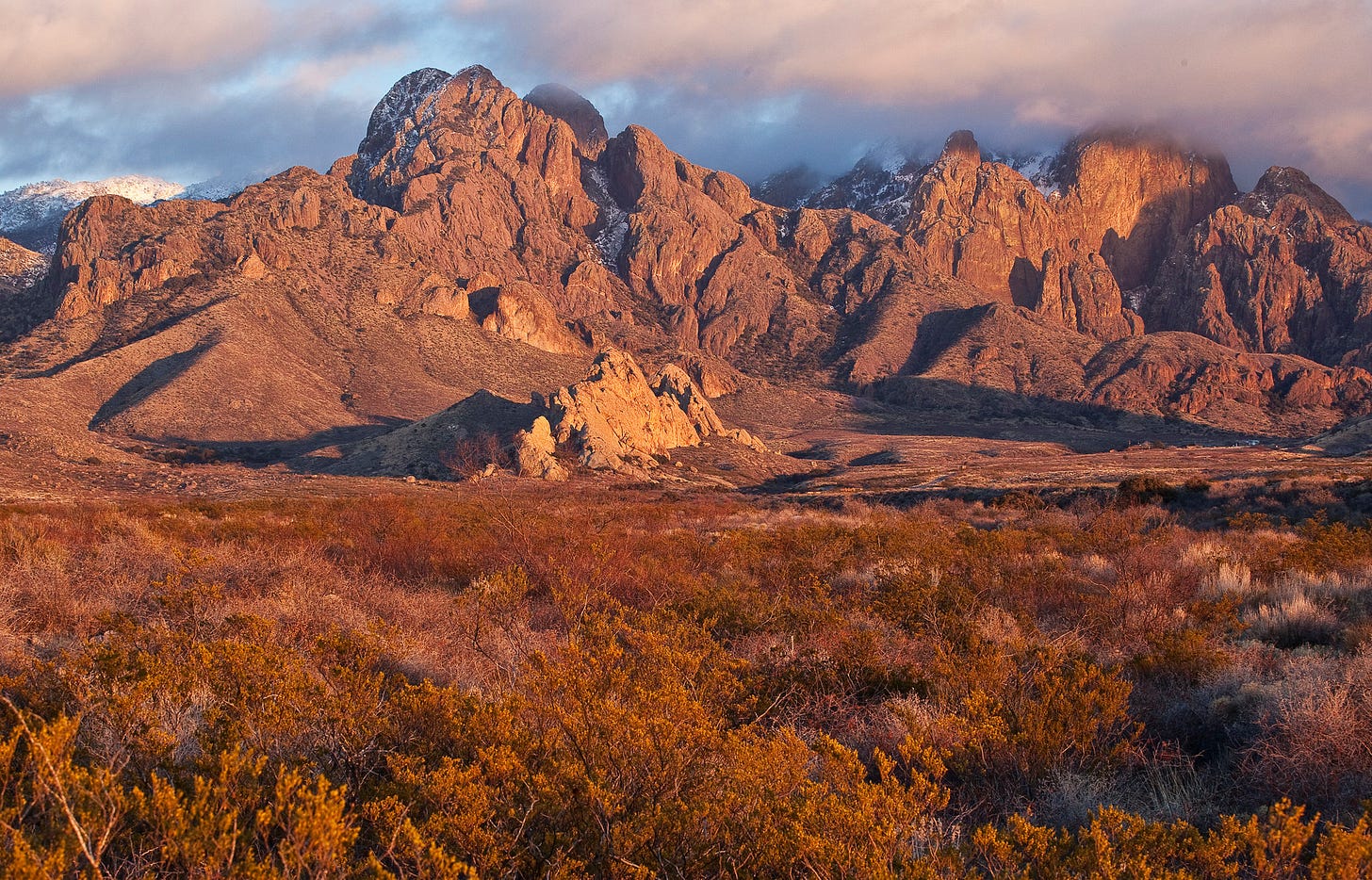
Representative Pearce has consistently denied the president’s authority to designate national monuments under the Antiquities Act and opposed the designation of new national monuments. Most notably, Pearce opposed the original designation of Organ Mountains-Desert Peaks National Monument in New Mexico, which is now celebrated as a crucial contributor to the economy of nearby Las Cruces.
During his tenure in Congress, Pearce repeatedly voted for legislation that sought to undermine the Antiquities Act and eliminate or reduce national monuments. Pearce supported a 2017 bill that would limit the president’s authority to use the Antiquities Act to designate national monuments and allow for the reduction in size of existing monuments. “Previous Administrations abused their executive authority by designating overly expansive monuments under the Antiquities Act. In New Mexico, many private and state lands are landlocked by monument designations,” Pearce said in a statement about the bill.
In 2017, during President Trump’s national monuments review, Pearce signed on to a letter to President Trump advocating for “the shrinking or rescission of a majority of the monuments under review.” Pearce argued that Organ Mountains-Desert Peaks National Monument, in his own district, should be reduced by 92 percent, from 500,000 acres to about 60,000 acres.

Oil and gas development, BLM New Mexico
Oil and gas conflicts of interest
Before launching his political career, Pearce owned an oilfield services company, Lea Fishing Tools, headquartered in Hobbs, New Mexico. In 2003, Pearce and his wife sold the company’s assets to Ken Energy Services for $12 million, twice the value that Pearce had claimed on his financial disclosure forms, according to Roll Call. Following the sale of the assets, Lea Fishing Tools changed its name to Trinity Industries, which Pearce and his wife continued to own. While a member of Congress and gubernatorial candidate, Pearce owned two oilfield equipment rental companies—Trinity Industries and LFT—from which he made between $200,000 and $2 million in 2017, according to a financial disclosure statement filed when he ran unsuccessfully for governor of New Mexico in 2018.
While in Congress, Pearce served on the House Natural Resources Committee, was ranking member on the Subcommittee on Energy and Mineral Resources, and sponsored and supported legislation aimed at expediting oil and gas development on national public lands. Two of his signature bills, introduced in 2018, were the Common Sense Permitting Act, which would have expanded the use of categorical exclusions under the National Environmental Policy Act to include many drilling permits, pipelines, and roads, essentially exempting them from environmental review; and the Ending Duplicative Permitting Act, which would have removed federal permitting requirements for oil and gas drilling on non-federal surface land if the subsurface was less than 50 percent federally owned. Neither became law.

Lesser prairie chickens, Bureau of Land Management
Anti-ESA statements
Throughout his career, Pearce has voted for and cosponsored legislation that sought to weaken the Endangered Species Act and other protections for wildlife. Pearce attempted to reduce or block protections for the lesser prairie chicken, Mexican gray wolf, New Mexican meadow jumping mouse, dunes sagebrush lizard, and Mexican spotted owl, among other sensitive and threatened species. Pearce has repeatedly framed the Endangered Species Act as a threat to jobs, industry, and the economy broadly, and once claimed that if the dunes sagebrush lizard were listed as an endangered species, “most of the oil and gas jobs in southeast New Mexico” would be at risk.
A test for the Senate Stewardship Caucus
The nomination of Steve Pearce to lead the nation’s largest public lands agency provides a critical test for the newly formed “Senate Stewardship Caucus.” Montana Republican Tim Sheehy and New Mexico Democrat Martin Heinrich co-chair the bipartisan caucus, which was formed a few months after Utah Senator Mike Lee tried to insert a measure into a budget bill that would have led to the sale of millions of acres of national public lands. Senator Lee was forced to pull his land sell-off provision in part due to vociferous opposition from Republicans, including Montana Senator Steve Daines and Congressman Ryan Zinke. Senator Sheehy was one of the Republican senators who threatened to vote against the One Big Beautiful Bill Act unless Lee’s sell-off provision was removed.
Despite Pearce’s previous comments and legislation calling for the sale of public land, at least one member of the Stewardship Caucus has come out in support of his nomination to run the BLM. “I knew Steve in the House days, and Steve is a great pick. And I particularly like the fact that it’s a Westerner,” Daines said in an interview.
Both Lee and Heinrich helm the Senate Energy and Natural Resources Committee that will consider Pearce’s nomination. Senator Heinrich said in a statement, “For the position to lead the Bureau of Land Management, I want to know whether they will respect the public land protections we have in New Mexico and across the West. We need a person in this position who will be a good steward of our public lands for all of us, not divvy them out as political favors.”
Conclusion
Nominating an avowed anti-public lands and sell-off advocate with personal ties to extractive industries puts America’s public lands on the chopping block. Pearce’s congressional record and public statements make clear that he is committed to the exploitation, sell-off, and privatization of America’s public lands, not stewarding them for the benefit and enjoyment of present and future generations. By confirming Pearce to lead the BLM, Senator Lee would have a powerful ally to pursue more ill-fated attempts to sell America’s public lands to the highest bidder. Westerners will soon find out if the Senate Stewardship Caucus will follow its charter—and the will of the overwhelming majority of Americans who value national public lands—by opposing Pearce’s nomination.
Featured image: Steve Pearce, U.S. National Archives